Your AI Agent Should Not Have a Standing Role
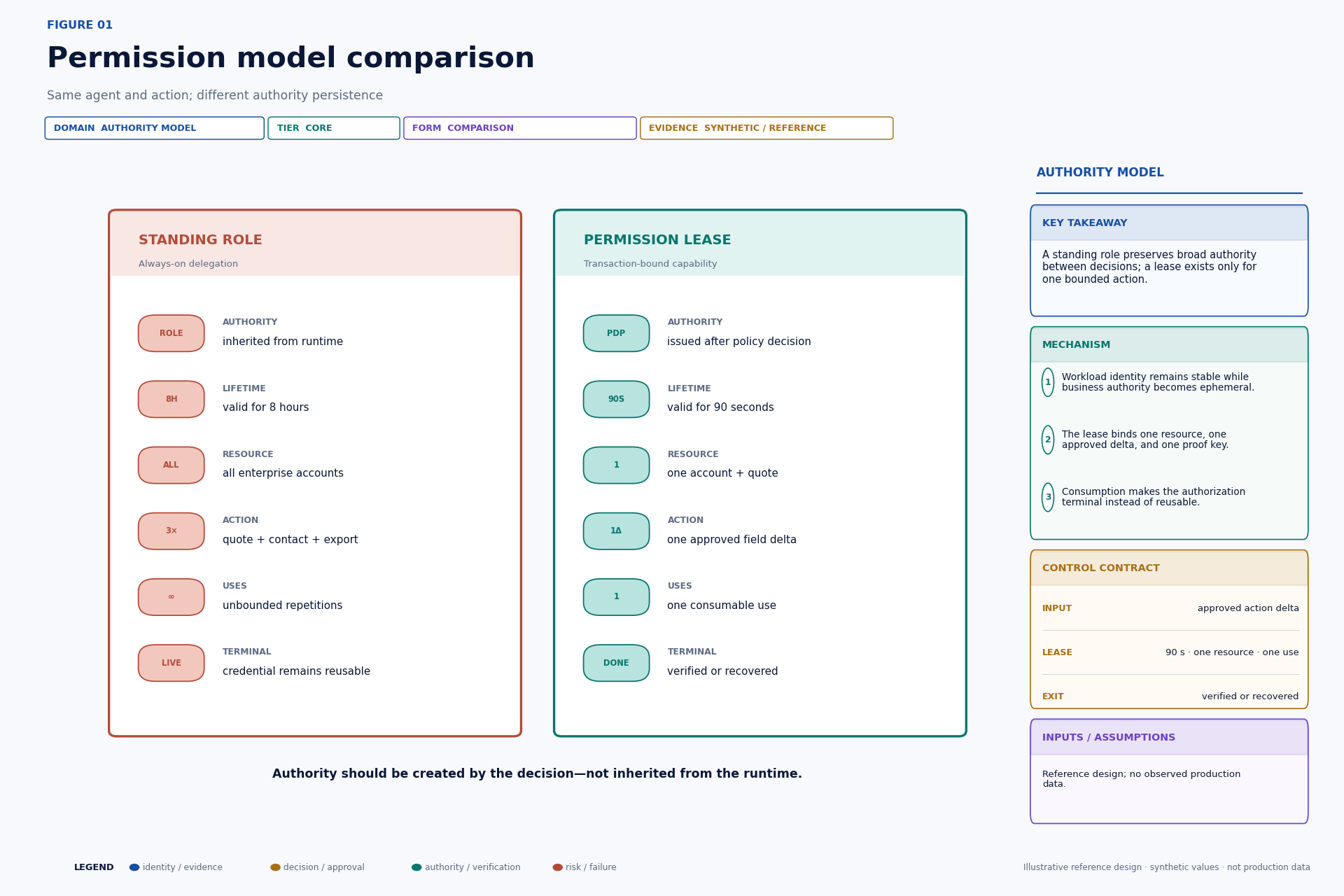
Replace standing AI-agent authority with transaction-bound permission leases using proof-bound tokens, one-use execution, verification, and recovery.
Independent writing · Enterprise systems
Essays on agent architecture, identity, economics, governance, and the operating models required to move enterprise AI from demo to production.
Guided reading
Identity, authority, evidence, approval, verification, and recovery patterns for agents that act in consequential systems.
Explore series → 3 storiesReference architectures and operating models for evolving CRM from a passive system of record into a governed system of action.
Explore series → 1 storyCost models that connect inference, control planes, human review, verification, and business outcomes.
Explore series →The archive
Replace standing AI-agent authority with transaction-bound permission leases using proof-bound tokens, one-use execution, verification, and recovery.
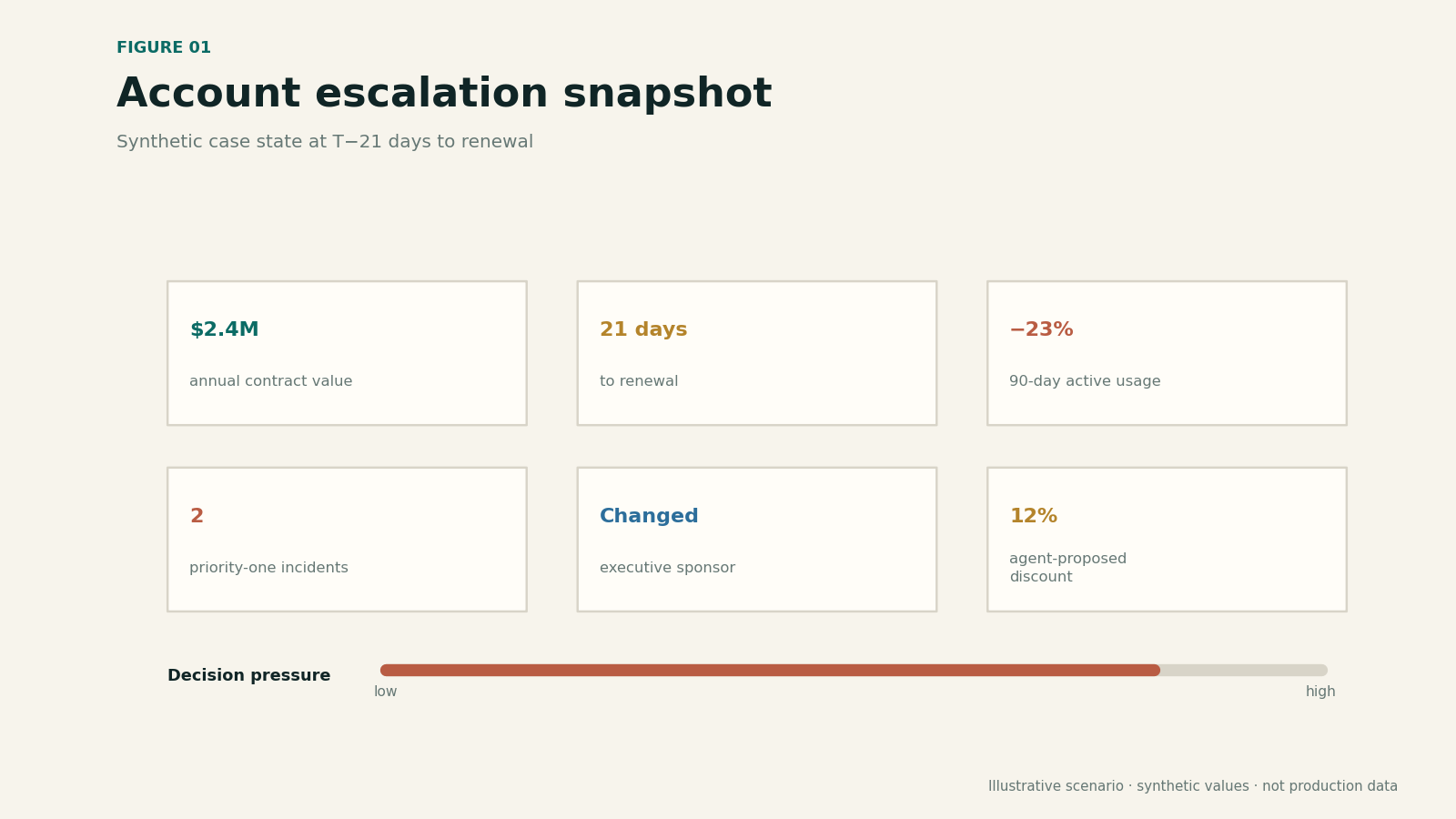
A practical production architecture for governing consequential CRM agent actions with evidence, action-level risk, human approval, leased permissions, verification, and recovery.
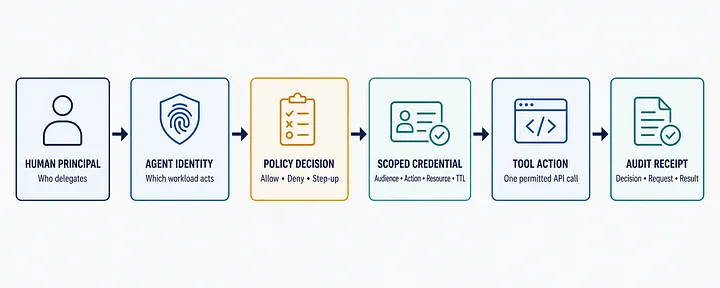
Learn how to control AI agent access with delegated authority, scoped credentials, policy decisions, and audit receipts across five enterprise use cases.
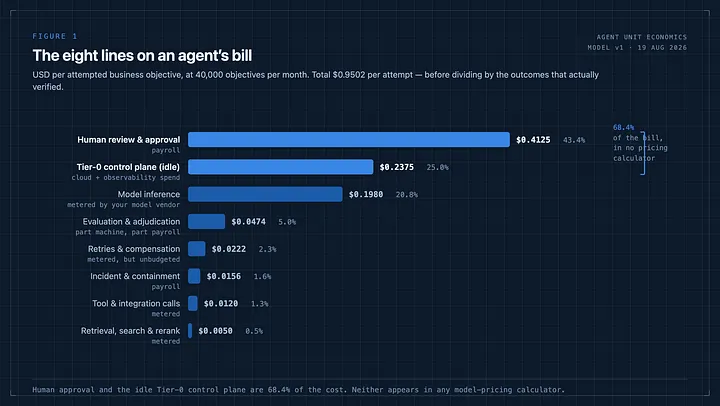
Model inference is only part of the bill. See where production AI agent costs accumulate across governance, integration, people, and operations.
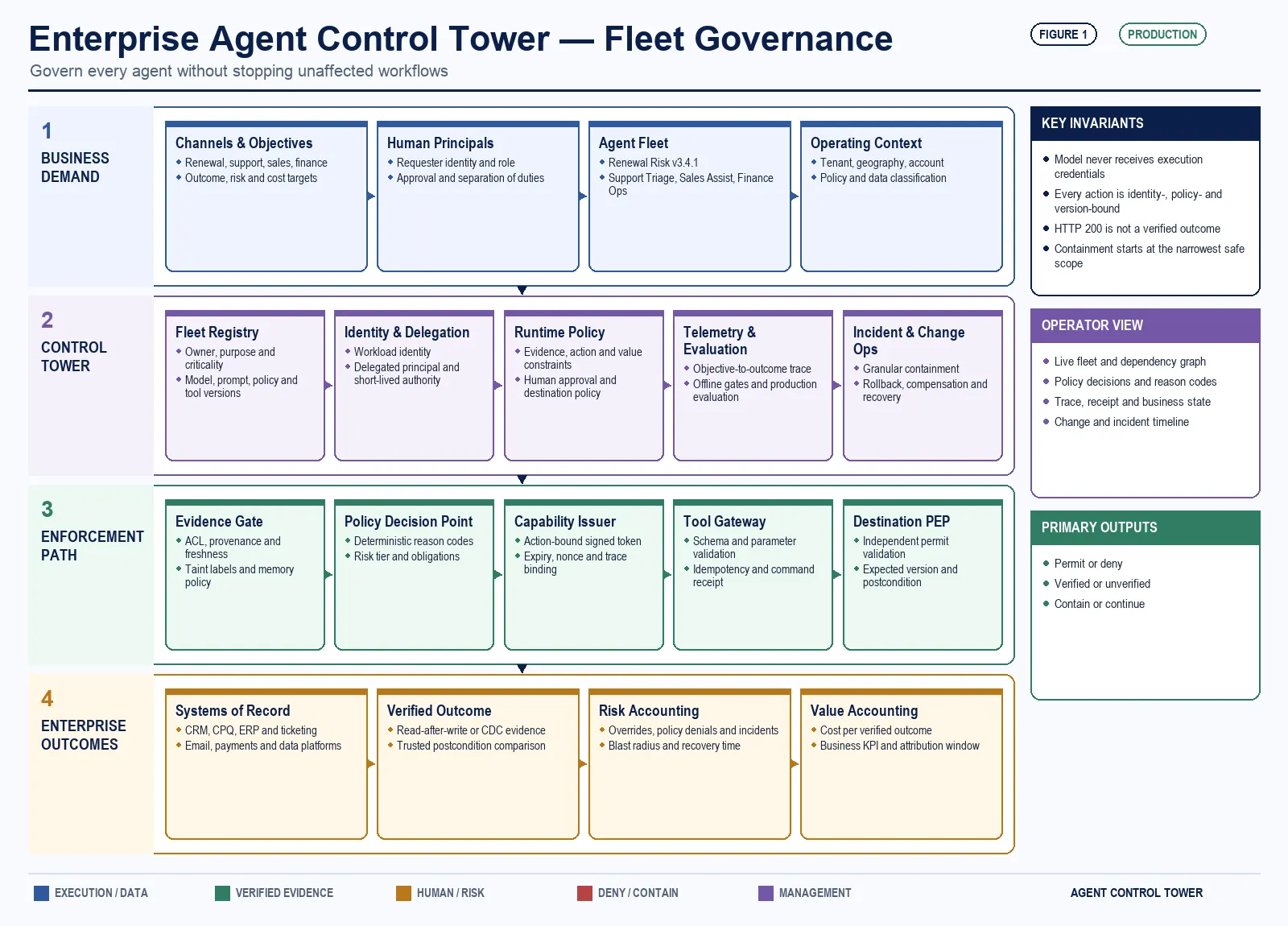
A production blueprint for governing enterprise AI agents across identity, policy, verified outcomes, risk accounting, audit, and containment at scale.
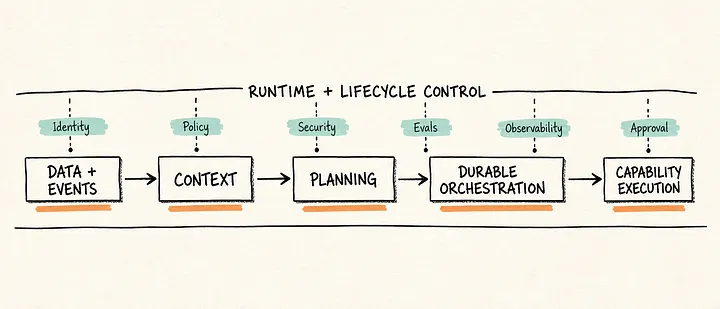
A practical reference architecture for agentic CRM, covering trusted context, durable orchestration, policy controls, human approval, and evaluation.
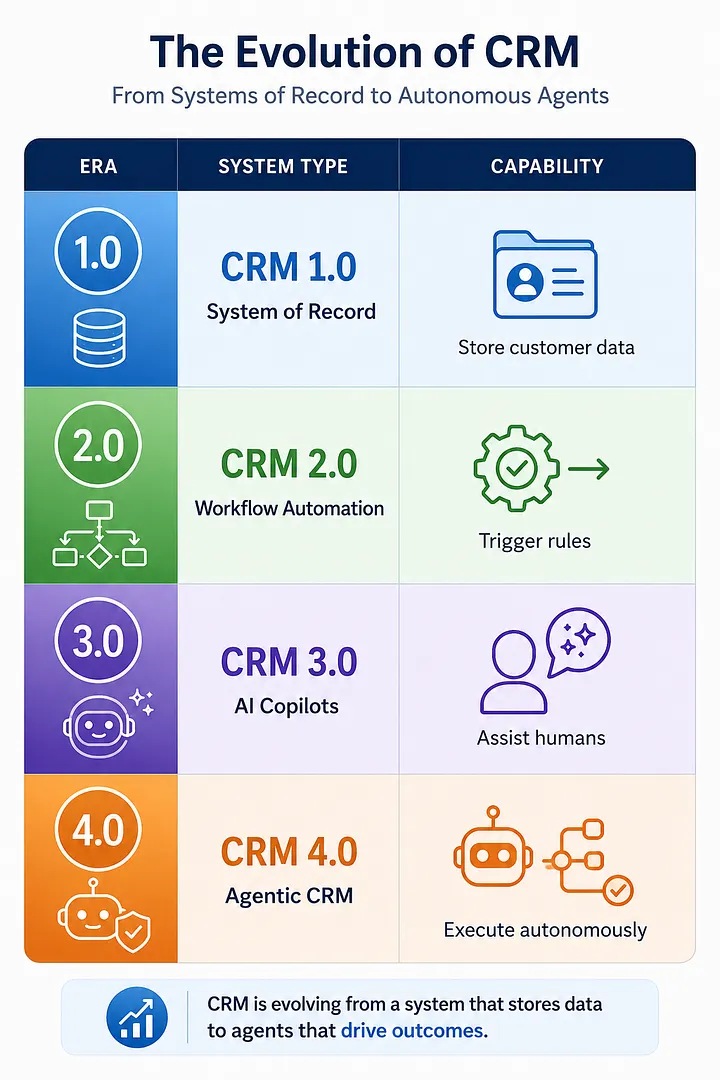
Static CRM records customer activity but rarely coordinates action. Learn how agentic AI turns it into a governed execution system for modern operations.
No stories match that search.
About the author
Aditya Singh writes for leaders and builders translating agentic AI into production systems: architectures, economics, governance, and the decisions behind them.